
On this page
Your needs, this model
Does it fit your priorities?
Do you need a full processor disc, or only a small bowl for pulse chopping?
The exact HC306 page and booklet describe a 1.5-cup bowl, one removable blade and one-touch pulse. If a feed chute, slicing/shredding disc or dough tool is essential, this chopper does not fit that job; compare an exact U.S. full processor instead.
Explore this need in the finder →Will the booklet's one-cup examples cover your usual batch size?
For raw produce cut into 3/4-inch pieces, leafy herbs and nuts, the exact HC306 booklet gives one-cup batch examples with five-second pulses. That is smaller than its 1.5-cup bowl rating and does not promise a full bowl for every task.
Explore this need in the finder →Are you identifying a Canadian HC306 or looking for a verified U.S. purchase?
The product page is an exact Canadian listing and the site does not establish a U.S. retail package or electrical rating. The warranty field also conflicts with the exact-code booklet. Keep HC306 as an identification reference, not a U.S. buying recommendation.
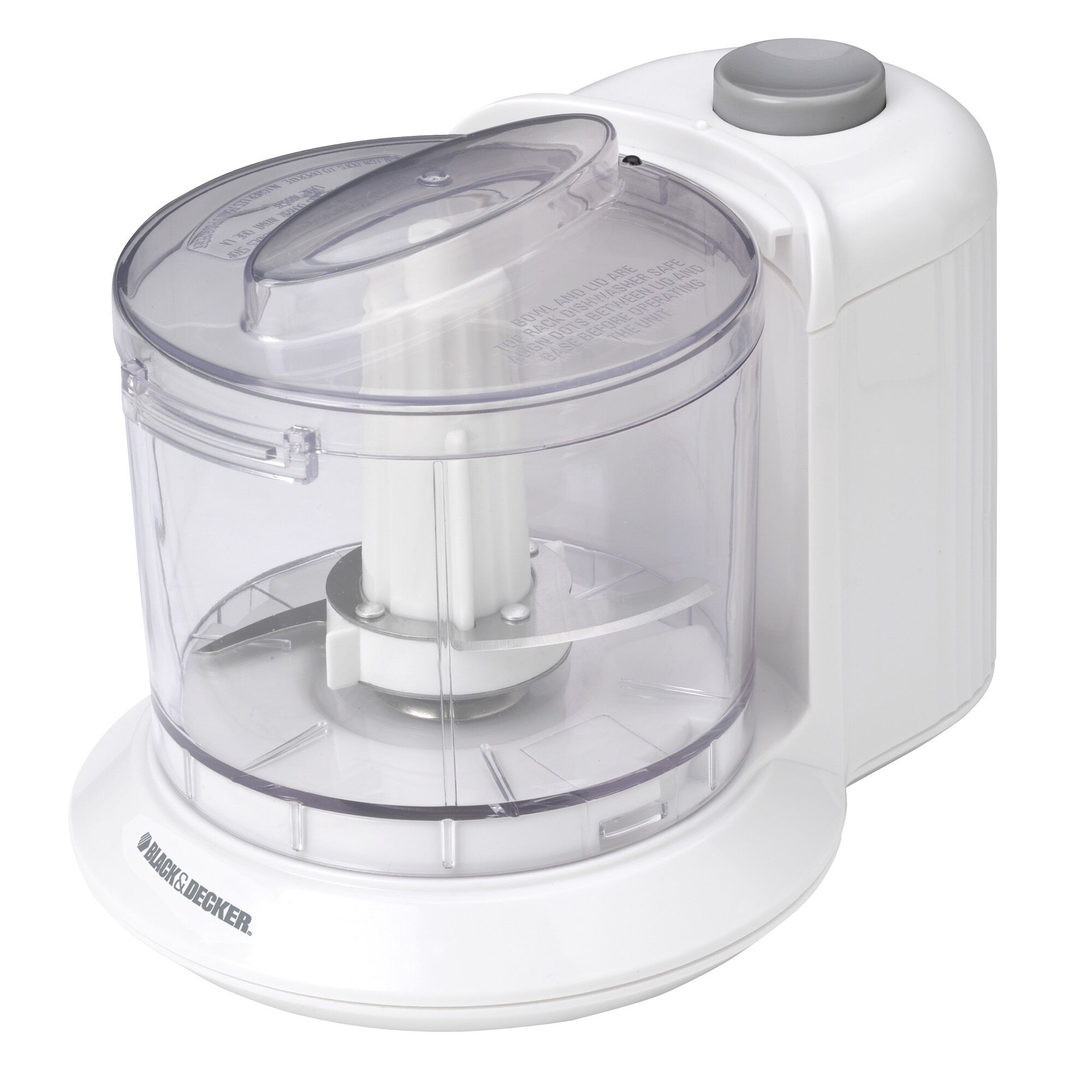
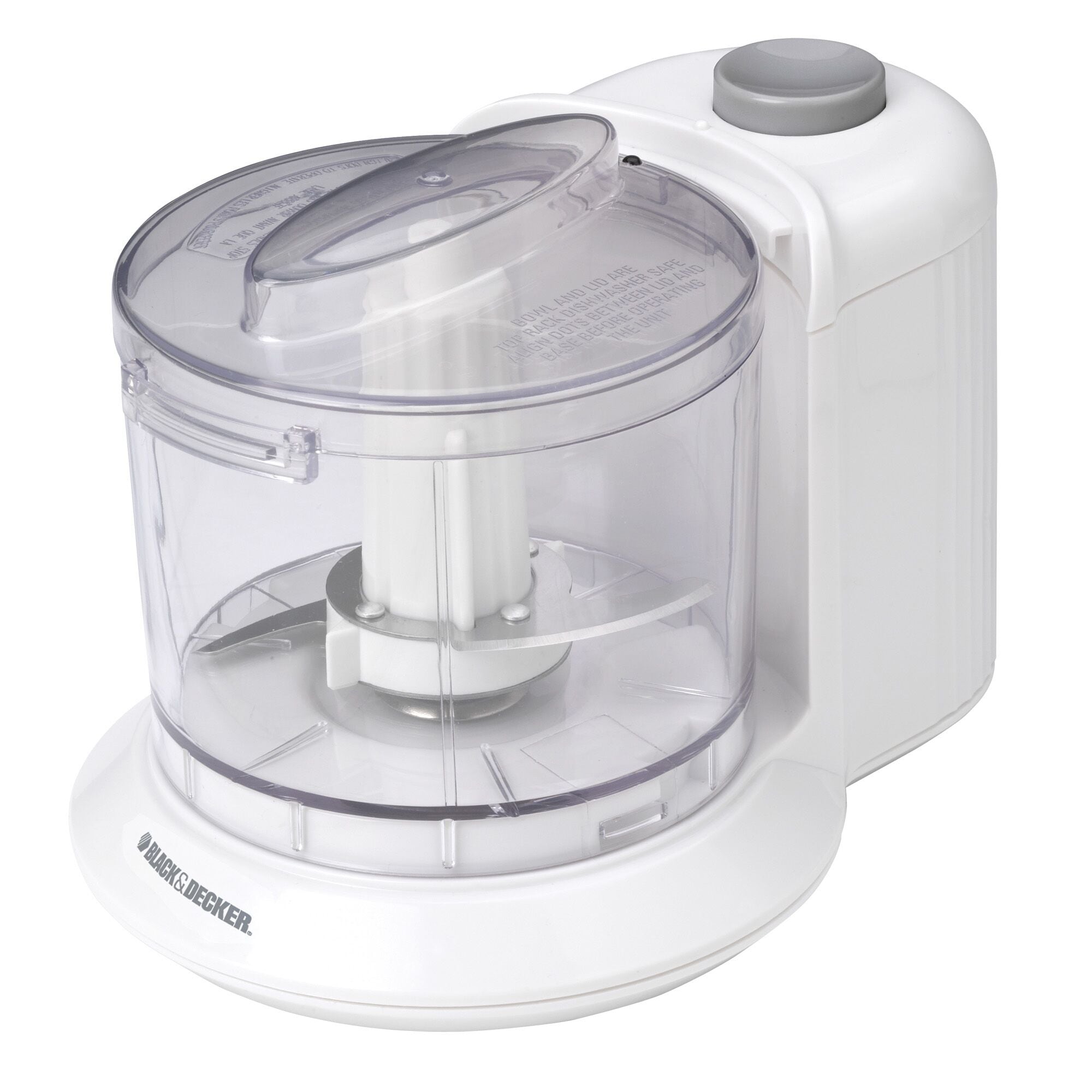
Explore this need in the finder →The BLACK+DECKER HC306 is a one-touch chopper, not a full-size food processor. BLACK+DECKER Canada lists it with a 1½-cup bowl, a stay-sharp blade, a safety-locking lid and a single pulse button. Treat this as a Canadian-market model reference for identifying an HC306, not as a U.S. buying recommendation: the exact product listing is Canadian, and the available sources do not establish a U.S. retail package or electrical rating.
A tiny bowl is useful only when the batch is tiny
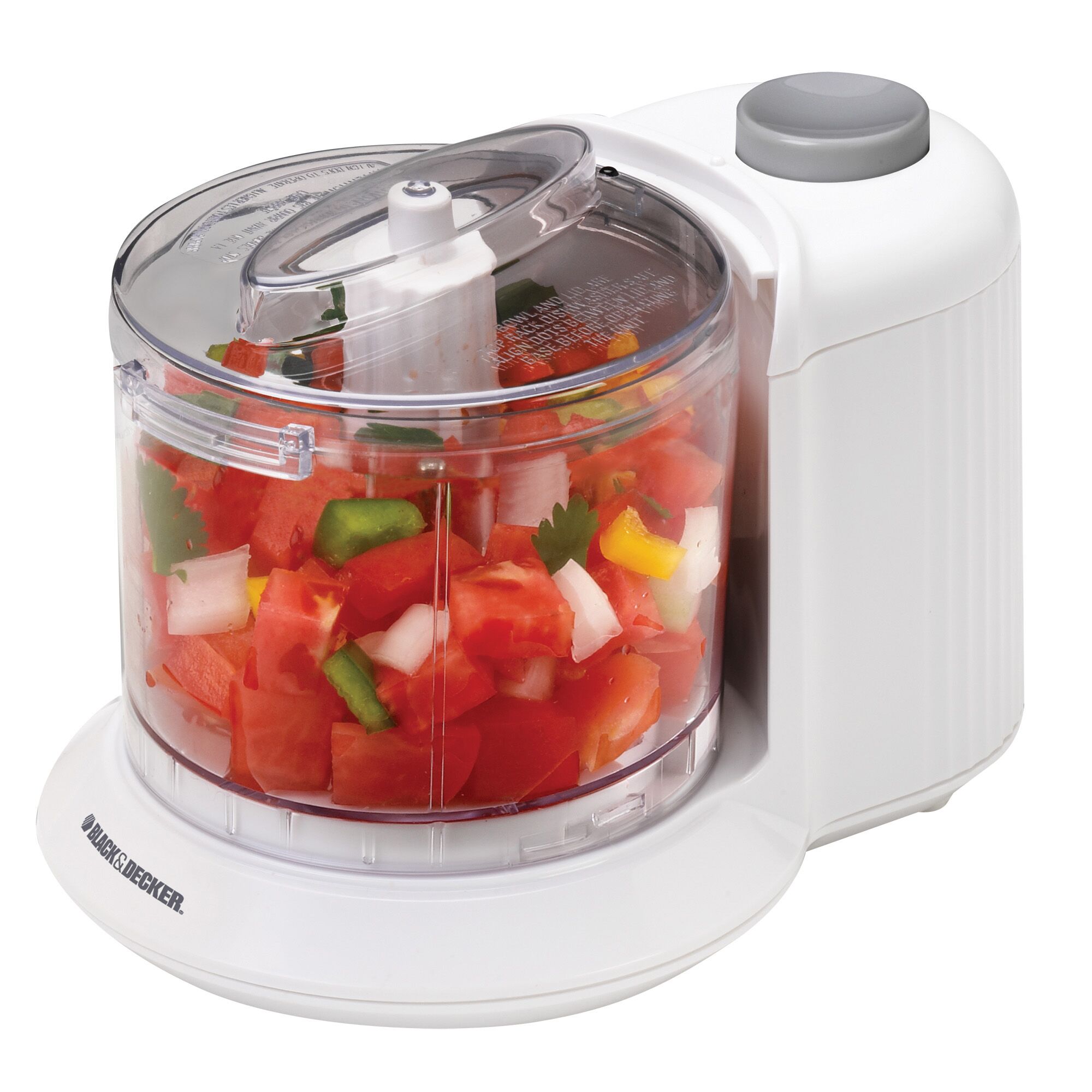
The 1½-cup figure is the stated bowl capacity, not a promise that every ingredient can be loaded up to that mark. The HC306 booklet gives task-specific examples instead. It allows up to one cup of raw fruit or vegetables cut into ¾-inch pieces, one cup of leafy herbs with stems removed, and one cup of nuts, each worked in five-second intervals. It lists up to one 8-ounce can of drained cooked or canned produce, one bread slice at a time, and a small amount of baking chocolate. These examples are more useful for planning than simply treating the full bowl rating as a batch limit.
That makes the HC306 a sensible shape of appliance for small amounts of salsa ingredients, herbs, nuts, crumbs or a quick mince when a large processor bowl would be mostly empty. It is a poor fit for someone who regularly wants a large bowl of chopped vegetables, even slicing across a cabbage, or a batch of dough. The manual describes one removable blade assembly and a bowl-loading workflow; neither the exact Canadian page nor the HC306 booklet lists a slicing/shredding disc, dicing grid or dough blade. A pulse button gives you a way to stop and inspect texture, but it does not produce the even slices of a dedicated disc setup.
One button, with a safety sequence to respect
The operating sequence is simple, but the lid lock is part of the design rather than an optional convenience. The booklet says to lock the bowl onto the base, place the blade hub on the shaft, then turn the lid until its extended tab engages the safety lock and the alignment marks meet. The unit will not operate unless the lid and base marks line up. Add ingredients in the bowl, lock the lid, then press the top-mounted button to pulse. The blade is sharp, so unplug the chopper and wait for it to stop before opening the lid or lifting out the blade.
Use the manual’s five-second intervals for the listed foods and judge the texture between pulses. The booklet warns against running the motor continuously for more than one minute. It does not state a separate rest time or promise how many successive batches the motor can handle, so do not turn that ceiling into an invented duty-cycle claim. If you need extended shredding or repeated large-volume prep, a full processor with its own feed chute and disc package is the better category to compare.
Cleanup is straightforward; the warranty record is not
The HC306 instructions say the bowl, locking lid and removable blade can go on the dishwasher’s top rack. Wipe the base with a damp cloth rather than immersing it. For such a small appliance, that clear distinction matters: the work parts can be cleaned separately, while the motor base stays out of the sink and dishwasher. The removable parts are listed in the booklet with replacement-part numbers, which can help identify the assembly when comparing a used unit.
There is a source discrepancy worth keeping visible. The current Canadian HC306 page’s warranty field says “No Limited Warranty,” while the exact-code HC306 booklet says a two-year limited warranty applies in the United States and Canada. Those statements do not establish which terms apply to a particular Canadian listing or unit, so this assessment does not pick one. If you own an HC306, check the rating label and ask the manufacturer about coverage for that exact sale and region rather than relying on a warranty assumption.
Who should compare it—and what should they compare instead?
For a current U.S. purchase, the HC306 should not be the answer: the manufacturer page reviewed here is Canadian, and no matching U.S. package, voltage or offer has been verified. If you are identifying a Canadian HC306 already in a kitchen, its small-batch pulse operation and one-cup manual examples are the useful facts to start from. Verify that the bowl, lid, blade and base in a used set belong together, and follow the booklet for that model.
For a U.S. mini-chopper alternative with a larger, manufacturer-rated three-cup bowl and a separately described Chop/Grind workflow, compare the Cuisinart CCH-3 assessment. If your routine includes slicing and shredding or larger ingredient batches, compare a full processor such as BLACK+DECKER’s U.S.-listed FP4100B instead; it has its own package record and should not be treated as the same machine under another suffix. Neither alternative changes what is or is not documented for HC306.
Bottom line: HC306 is a compact Canadian-listed one-touch chopper whose manual gives useful one-cup task examples, five-second pulse guidance and top-rack care for the removable bowl parts. Its narrow role is the advantage; the small task scale, lack of processor discs and unresolved regional warranty statement are the tradeoffs. This review is a manufacturer-source assessment, not a claim about personal testing, measured speed or current U.S. availability.
Sources: BLACK+DECKER Canada’s HC306 product page and the exact-model HC306 Use and Care booklet. Cuisinart CCH-3 and BLACK+DECKER FP4100B are separately assessed U.S. models.
Key details at a glance
| Rated work-bowl capacity | 1.5 cups |
|---|---|
| Extra-large feed tube identified | No |
| Dicing kit included | No |
| French-fry disc included | No |
| Dough blade included | No |
| Refrigerator lid included | No |
More specifications and setup details
| Whisk accessory included | No |
|---|---|
| Fine/thin and medium shredding options included | No |
| Drizzle basin included | No |
| Additional work bowl confirmed | No |
| Adjustable slicing disc included | No |
| Medium shredding disc included | No |
| Removable parts dishwasher-safe | Yes |
| Continuous-feed attachment included | No |
| Dedicated Grind function documented | No |
| Slicing/shredding disc included | No |
| Top-rack dishwasher-safe removable parts | Yes |
Use the exact model’s instructions for operating limits, supplied equipment and version differences.
Sources for this assessment
Choose a tool set for your usual prep.
Compare exact tools and manual limits: Cuisinart Mini-Prep Plus DLC-2A and DLC-4CHB, CCH-3, ECH-4SV and MCH-4 Chop/Grind batches; Hamilton Beach 70450 bowl and reversible-disc tasks; the 70510’s documented bowl-based smoothie method and slicing disc; FP-5 and FP-7 bowls; the FP-9CF continuous-feed setup; KitchenAid choppers; and larger processors. Hamilton Beach 70585 adds a 14-cup bowl, nested 4-cup chop/puree bowl, a dough blade for up to 4 cups flour and top-rack care; compare its separate task caps before batch prep. For a 10-cup bowl with a lid-operated scraper, compare the Hamilton Beach 70730J; its scraper is limited to blade work, and the manual rules out kneading dough, ice crushing and grinding. Hamilton Beach 70723G adds a 10-cup Stack & Snap package with a two-minute manual motor-on limit; it has no dough blade or scraper. The Hamilton Beach 70740G offers an eight-cup bowl with a reversible disc; its manual limits produce and cheese batches below the headline bowl size and rules out dough, ice-crushing and dry-grinding. The white 70733 adds a page-listed 10-cup scraper package, but its linked manual labels 70730/70731; do not carry those operating limits over. Compare it only for exact page-backed tools and keep top-rack, scraper/disc compatibility and task limits unknown. Breville adds two nine-cup choices: the Sous Chef 9 BFP610 has an adjustable slicer and dough blade without a standard-box dicing grid, while the Paradice 9 BFP638 includes a half-inch dicing kit. Compare the <a href="/learn/breville-sous-chef-9-vs-paradice-9/">two Breville nine-cup packages</a> by tool list, manual care and listed body height. Compare Breville’s current Paradice 12 BFP738 and Paradice 16 BFP838 by their distinct bowl sizes, dicing grids, included mini bowl and fry disc in the <a href="/learn/breville-paradice-12-vs-16/">Paradice 12-versus-16 guide</a>. Compare the BFP800 Pro, BFP810 and BFP820 Peel & Dice by their separate packages in the <a href="/learn/breville-sous-chef-16-bfp800-810-820/">Sous Chef 16 family guide</a>: the included grid, peeler and mini-bowl details change the answer. Ninja TotalCrush IQ801BK is a three-vessel hybrid with one 8-cup processor bowl, a separate 72-ounce pitcher and a separate 24-ounce tumbler; compare its chopping/dough tool list with CrushBOSS slice/shred/crinkle and dicing packages. Braun EasyPrep package choices also differ: FP3101BK lists one fixed 4 mm reversible slicing/grating disc; FP3211SI lists fixed 2 mm and 4 mm discs plus a dough tool; CH3012BK is the small chopper with a listed mayonnaise accessory and separate 0.5 L working-capacity figure. Vitamix SmartPrep systems combine an Ascent blender with a separate SELF-DETECT processor attachment: X2 has three blender programs, X4 itemizes julienne and veggie-stick discs, and X5 lists ten blender programs but the standard processor discs. X5 Deluxe adds a blending cup-and-bowl kit, not a second processor bowl. The attachment manual sets 12 cups dry, 8 wet and a three-minute continuous-use ceiling. Oster adds a white six-cup blender and three-cup processor attachment in SAP 2197995; compare that format with the glass-jar 6878 chopper and the ten-cup 2142993 bowl processor in the Oster package guide. Proctor Silex has two earlier sizes worth distinguishing: the 72706 is a three-cup mini processor with an oil-dispenser lid and small-quantity adjuster, while the 70810 is a nine-cup Quick Clean model with a reversible slice/shred disc. Both exact pages say No Longer Available; their manuals do not support every task a larger bowl might suggest.